What is Giving Compass?
We connect donors to learning resources and ways to support community-led solutions. Learn more about us.
Giving Compass' Take:
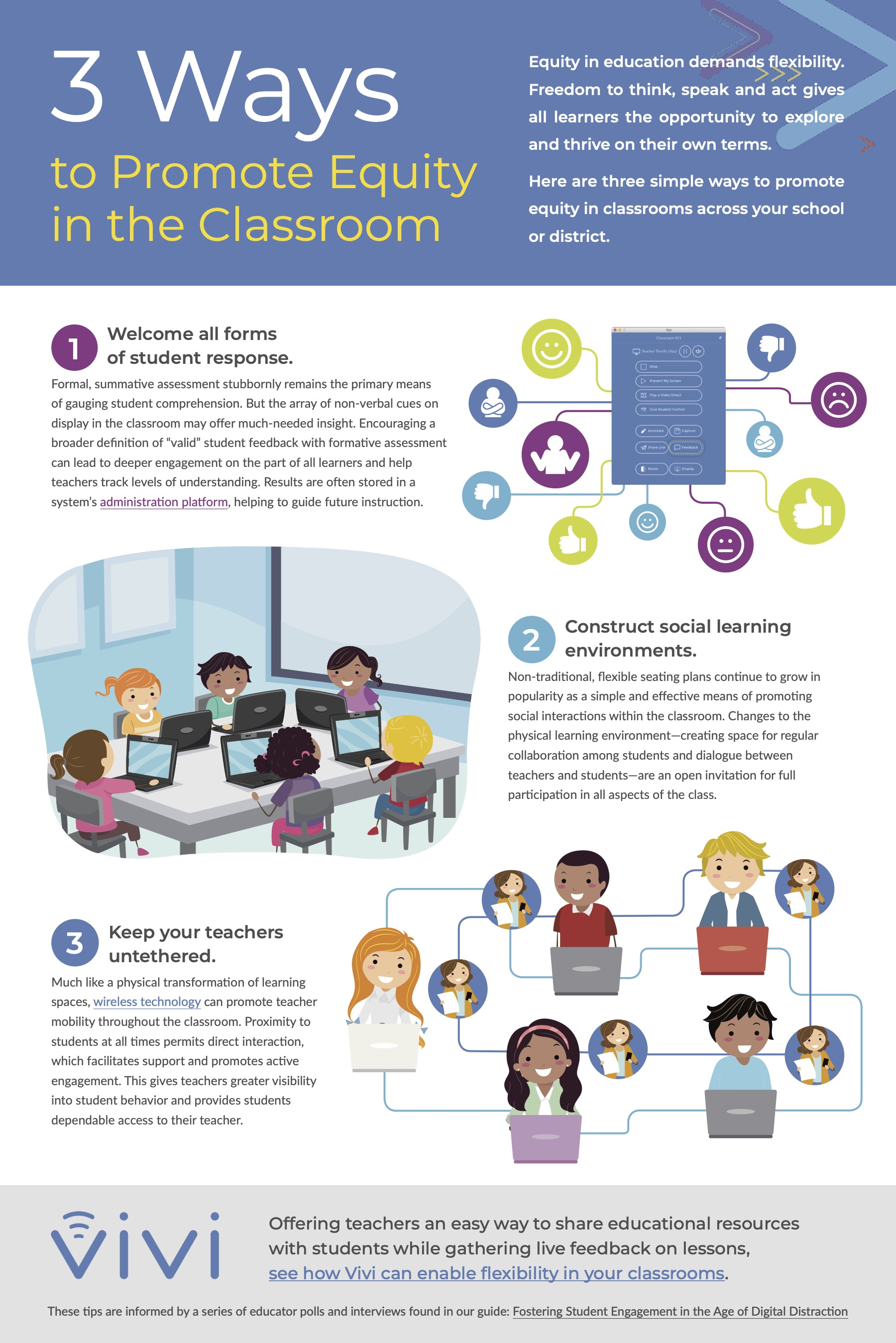
• Here is an infographic that discusses three ways that classrooms can support and promote equity.
• The author notes that flexibility is required for equitable education systems to thrive. How can donors help educators with flexibility?
• Learn why educational equity requires more than access.
Flexibility is the key to providing an equitable learning environment—one in which every student feels comfortable, valued and fully included in all aspects of learning. Discover how you can make this happen at your school or district today.
- Welcome all forms of student response. Formal, summative assessment stubbornly remains the primary means of gauging student comprehension. But the array of non-verbal cues on display in the classroom may offer much-needed insight.
- Construct social learning environments. Non-traditional, flexible seating plans continue to grow in popularity as a simple and effective means of promoting social interactions within the classroom.
- Keep your teachers untethered. Much like a physical transformation of learning spaces, wireless technology can promote teacher mobility throughout the classroom. Proximity to students at all times permits direct interaction, which facilitates support and promotes active engagement.
Read the full article about promoting equity in the classroom from ViVi at EdSurge.