At the Johnson Center, we think of philanthropy as an ecosystem of nonprofit organizations, individual donors, formal foundations of all types, and corporate giving programs. Essentially, it includes all of…
-
-
 This article is deemed a must-read by one or more of our expert collaborators.
Click here for more.“Are we doing enough to advance racial equity and social justice through our grantmaking strategies?” That question led State Street Foundation on a journey to uncover greater opportunities for impact…
-
This article is deemed a must-read by one or more of our expert collaborators.
Click here for more.It is one of the ideas with the greatest currency in philanthropy right now: More funders need to make large, unrestricted grants, and then trust nonprofits to use them well. Despite…
-
This article is deemed a must-read by one or more of our expert collaborators.
Click here for more.Let’s talk about legacy and stewardship. Not the staid legacy of your family name etched on a building plaque or the status quo of stewardship that prioritizes perpetual control. I’m…
-
In an era of big-bet philanthropy, a small foundation can still have an outsize impact. Here are seven techniques for getting more from your philanthropic dollar.
-
Support Nonprofit Resilience Grantmakers enable nonprofits to focus on long-term mission fulfillment by providing support that is flexible, reliable and enables grantees to build critical skills. Whether it’s supporting the development of strong nonprofit leaders, helping grantees to build and maintain their capacity or providing the kinds of support that contribute to strong and effective nonprofits, grantmakers can play a key role is supporting the financial resilience and sustainability of their grantees. To help grantmakers support nonprofit resilience, GEO has compiled answers to some of the most common questions about financial sustainability, capacity building and leadership development. If you would like to propose a new question related to this topic, please contact Amy Shields. Leadership Development A nonprofit organization’s resiliency and capacity to navigate change successfully depends largely on its people. Ask any grantmaker about the distinguishing characteristics of strong and effective nonprofit organizations, and the conversation inevitably will turn to leadership. But too often nonprofits lack sufficient time and resources to make their talent and leadership needs a high priority, which ultimately hinders impact. Many grantmakers are making leadership development investments as a means of strengthening nonprofit performance What makes for a successful leadership development approach? How can we target our leadership development support? What is collective leadership and how can grantmakers support it? What is coaching and what are the benefits? Where can we go to dig deeper on leadership development? What do nonprofits need to make leadership development a priority? Who is building leadership well? Frieda C. Fox Family Foundation The Durfee Foundation Capacity Building Nonprofits need certain core capacities in order to deliver results — strong leaders, financial management, performance measurement and technology, as well as softer things like communications, adaptability and relationships. These needs will also change over time as organizations evolve. Grantmakers can play a key role in helping nonprofits build and maintain their core infrastructure and other capacities. What is nonprofit capacity and why does it matter? What are three principles for building nonprofit capacity? How can we support capacity-building efforts? How will we know if our capacity-building support is working? What are the key things we need to know about organizational assessments? Where can we go to dig deeper on nonprofit capacity building? Who is successfully building nonprofit capacity? Financial Sustainability The size of many grants, and the strings attached to them, often don’t align with the results grantmakers seek. With GEO’s support, grantmakers are embracing approaches that fuel nonprofit success — such as providing general operating support, multiyear grants, larger average grants and support for leadership development and other forms of capacity building, as well as releasing restrictions on grants and caps on overhead. What financial challenges do nonprofits face? How can we be more supportive of nonprofit financial sustainability? What is general operating support and why is it important? How can we evaluate the impact of our general operating support grants? How do we know if a grantee is a good candidate for general operating support? How can we grow impact? What does it take to spend down successfully? Where can we go to dig deeper on nonprofit financial sustainability? Who is supporting nonprofit financial sustainability? In this section What We Offer GEO Community GEOList Conferences Conference Planning Process Peer Learning Remote Learning Capacity Building Champions Place Based Strategic Learners Network Community Driven Philanthropy Peer Network Race Equity Culture™ Fellowship Change Leaders in Philanthropy Fellowship Publications GEO in the Field The Smarter Grantmaking Playbook Learn for Improvement Support Nonprofit Resilience Strengthen Relationships with Nonprofits Collaborate for Greater Impact Join the GEO Community 500+ members sharing insights and learnings to move philanthropy forward. Check out the benefits of membership
-
Last July marked the 31st anniversary of the Americans with Disabilities Act (ADA), a historic civil rights law. We have seen progress in the expansion of access to services and…
-
Learn for Improvement Evaluation enhances grantmaker and grantee performance when information is used to inform real-time improvements to strategy and practice. By adopting a learning for continuous improvement mindset, grantmakers can use evaluation to go beyond proving an intervention has worked to instead focus on understanding why and how performance can be improved. What does it take to learn well together? Many grantmakers embrace the value of learning and evaluation as a path to achieving better results. However, some see evaluation as something that takes place independently and primarily for internal improvement, and they struggle to extend this learning to those outside their organizations in a meaningful way. When we learn with others, we are not simply conducting final program evaluations; we are regularly assessing ways to improve our work and finding ways to be smarter and more effective in achieving our goals. When grantmakers join their partners in the learning journey, we acquire better information, which leads to better results. Find the full answer here > How can we embrace a learning for improvement mindset? A priority for grantmakers and our grantees is to create a space to reflect and learn so that our organizations can become more relevant, and more effective in achieving our goals. Learning, and evaluation, that is specifically focused on improvement provides grantmakers and grantees with the information and the perspective we need to better understand both how we’re doing in our work and how to get better results. In order to embrace a learning for improvement mindset, funders need to have key conversations with our boards and staff, as well as with grantees and other grantmakers. This piece offers guidance on what those conversations should cover in order to deliver on the promise of learning for improvement and ultimately better results. Find the full answer here > Where should we start in using evaluation as a tool for learning? Many grantmakers agree that an increased focus on evaluation and learning can help us tease out insights on our true impact and how we can continue to do better. However, despite significant investments in evaluation in recent years, philanthropy continues to struggle to measure its work. This piece offers funders a starting point for developing and strengthening our ability to evaluate by focusing on key elements of planning and organizing the work. Find the full answer here > What does effective due diligence look like? Due diligence is a process that helps grantmakers get to know grantseekers. Typically, it’s seen strictly as a means to ensure an organization’s financial and legal compliance. However, when done well, due diligence has the potential to provide insight into such critical attributes as the role of the organization’s board, the position the nonprofit holds in its field and community, and the level of alignment between our own mission and the goals of the grantseeker. The difficult part of due diligence is in asking the right questions and in a way that makes the most of the nonprofit’s time and resources. Efficient due diligence efforts avoid overburdening nonprofit staff with excessive and difficult to navigate applications and forms that provide little value. This piece provides an overview of what it takes to carry out an effective due diligence process. Find the full answer here > What is a learning organization? Learning in philanthropy can happen in any number of ways — from traditional training programs and orientations for new staff to regular discussions among staff members, board members, grantees and grantmakers about how things are going and how to get better results. Using evaluation as a tool for learning and continuous improvement requires an organizational culture that is committed to supporting the capacity of people to reflect on our work in ways that lead to better performance. But what does it really take to become a learning organization? This piece explores the characteristics of a learning organization and steps that funders can take to integrate learning into organizational culture. Find the full answer here > How do we select the right evaluation approach for the job? The most difficult part of evaluation can be to know where to begin. There is so much information we could gather, but the key is determining what is most useful for what we need to know now to make better decisions and improve performance. This piece offers a matrix to guide thinking about what we want to learn from our evaluation, what tools and methods can support that learning and what key questions can help shape evaluation plans. Find the full answer here > How can we help our grantees strengthen their capacity for evaluation? There is widespread and growing recognition in the nonprofit sector about the importance of evaluation — not only for measuring impact, but also for improving programs and better serving communities. While grantmakers generally see evaluation as necessary, most are not yet investing enough resources in this area. Indeed, in 2014, nearly three quarters of nonprofits reported that their funders “rarely or never” fund impact measurement costs. This means many nonprofits face an unfunded mandate to provide data that they don’t have the time or resources to produce. Find the full answer here > What makes a successful learning community? Learning communities are powerful vehicles for both individuals and communities to amass a shared collection of experience around learning and results from collective action. Grantmakers are well positioned to provide the types of support that catalyze, develop and sustain learning communities. This piece offers key learning for grantmakers about the design, execution and outcomes of learning communities. Find the full answer here > Where can we go to dig deeper on learning and evaluation? This document contains resources and websites that can assist grantmakers as we continue to assess and improve our learning and evaluation practices. It also provides a glossary of terms and basic background information to help ground us in common evaluation terminology and concepts. Find the full answer here > In this section What We Offer GEO Community GEOList Conferences Conference Planning Process Peer Learning Remote Learning Capacity Building Champions Place Based Strategic Learners Network Community Driven Philanthropy Peer Network Race Equity Culture™ Fellowship Change Leaders in Philanthropy Fellowship Publications GEO in the Field The Smarter Grantmaking Playbook Learn for Improvement Support Nonprofit Resilience Strengthen Relationships with Nonprofits Collaborate for Greater Impact Join the GEO Community 500+ members sharing insights and learnings to move philanthropy forward. Check out the benefits of membership
Read the full article at: www.geofunders.org
-
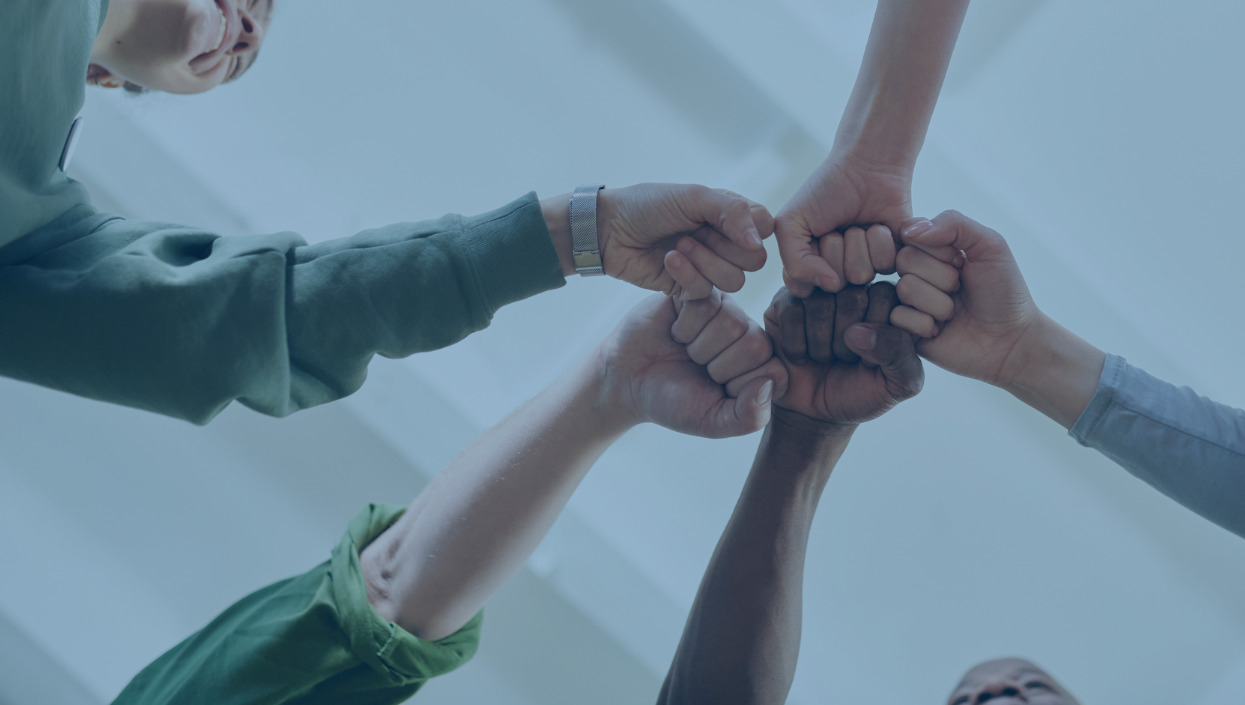
Trust-based philanthropy centers around advancing equity and ending power imbalances in grantmaking. See how General Service Foundation and Libra Foundation are putting trust-based processes into action.
Read the full article at: www.givingdata.com
-
This article is deemed a must-read by one or more of our expert collaborators.
Click here for more.Discussions of MacKenzie Scott’s unconventional approach to giving tend to devolve into binaries. Scott’s doling out of massive, unrestricted gifts — some $14 billion to 1,600 nonprofits so far —…
-
Strengthen Relationships with Nonprofits Better solutions take hold when they emerge from the communities we serve. When we fail to achieve the best results, it is often because we aren’t connected to our communities and the work of grantees. What is stakeholder engagement? Many grantmakers are recognizing that in order to ensure better results, we need to tap into the knowledge experience and energy of key stakeholders — nonprofits, community members, other funders, thought leaders. This type of engagement means reaching beyond the usual suspects, deep listening and involving key players in philanthropic decision making. Doing so provides a better understanding of the challenges on the ground, increases buy-in and improves strategies. Find the full answer here > What are different ways to engage stakeholders? A host of specific practices and activities can help grantmakers bring the voices of nonprofits, beneficiaries and community members into decision making and planning. These activities range from lower touch where grantmakers create vehicles to communicate with key stakeholders, to higher levels of involvement in shaping grantmaking programs. Find the full answer here > Which stakeholders should we involve in our decisions and how? Taking time early in the grantmaking process to map out the stakeholders affected by our work, and their position in the ecosystem, helps creates a deeper understanding of key issues. It also prepares us to address future concerns and to tap stakeholder expertise in a proactive way that helps build agreement and buy-in that ultimately leads to more effective programs. In order to do this well, grantmakers need to master stakeholder analysis and determine how to bring key players into decision-making. Find the full answer here > What is empathy and what are the benefits? Empathy is one of the main reasons individual and institutional philanthropy exist. Grantmakers in communities across the country and around the world are mission-bound to try and help people and communities overcome challenges in order to thrive. Implicit in most grantmaker missions is the message: “We care, and we want to help.” But while philanthropy often originates out of compassion and concern for others, grantmakers sometimes forget to make empathy a core driver of our grantmaking. In this piece, we discuss the value of empathy and how it can help grantmakers make smarter grantmaking decisions. Find the full answer here > How do we build and maintain authentic relationships? While we may not be able to totally remove the inherent power imbalance between grantmakers, our grantees and the communities we serve, we can take steps to build more trusting, honest and authentic relationships. By making our work about others, not ourselves, we can develop more genuine connections with grantees and communities. This can mean getting out of the office, bringing the outside into our organizations, making the necessary investments in time and resources, and leading from the top. Find the full answer here > How do we know if our stakeholder engagement is working? Effective stakeholder engagement starts and ends with respect — respect for the expertise that those on the front lines bring to the problems affecting their community, and respect for their capacity to develop solutions if given the chance. Assessing whether stakeholder engagement strategies have truly taken hold requires a shift in our traditional approach to evaluation and learning processes and the factors that constitute success. Find the full answer here > Where can we go to dig deeper on stakeholder engagement? This document contains resources and websites that can assist grantmakers as we continue to improve our engagement with grantees and other partners. Find the full answer here > Who is engaging stakeholders well? A searchable collection of member stories about strengthening relationships with nonprofits is available here. In this section What We Offer GEO Community GEOList Conferences Conference Planning Process Peer Learning Remote Learning Capacity Building Champions Place Based Strategic Learners Network Community Driven Philanthropy Peer Network Race Equity Culture™ Fellowship Change Leaders in Philanthropy Fellowship Publications GEO in the Field The Smarter Grantmaking Playbook Learn for Improvement Support Nonprofit Resilience Strengthen Relationships with Nonprofits Collaborate for Greater Impact Join the GEO Community 500+ members sharing insights and learnings to move philanthropy forward. Check out the benefits of membership
Read the full article at: www.geofunders.org
-
This article is deemed a must-read by one or more of our expert collaborators.
Click here for more.I gained a first-hand view of the scourge of domestic violence during law school, when I worked for the Los Angeles Bar Association helping survivors secure temporary restraining orders. What…